
How to Clean and Care for Your Adult Wellness Products
Proper cleaning isn't optional — it's essential for your health and the longevity of your products. Here's the definitive guide.
Affiliate Disclosure: This post may contain links to products on Amazon.ca. As an Amazon Associate we earn from qualifying purchases at no extra cost to you. Product recommendations are based on our editorial assessment; affiliate relationships do not influence our reviews or recommendations.
Cleaning your intimate wellness products properly is one of the most important habits you can develop. Inadequately cleaned toys can harbour bacteria, yeast, and viruses between uses — even when they look clean to the naked eye. The right cleaning method depends on the material and whether the toy is motorised.
For non-motorised, non-porous toys — stainless steel, borosilicate glass, and hard ABS plastic — sterilisation is possible and recommended. Stainless steel and glass can be boiled for 3–5 minutes, run through the dishwasher on the top rack without detergent, or wiped with a 10% bleach solution. This level of cleaning eliminates essentially all pathogens and is the gold standard for shared toys.
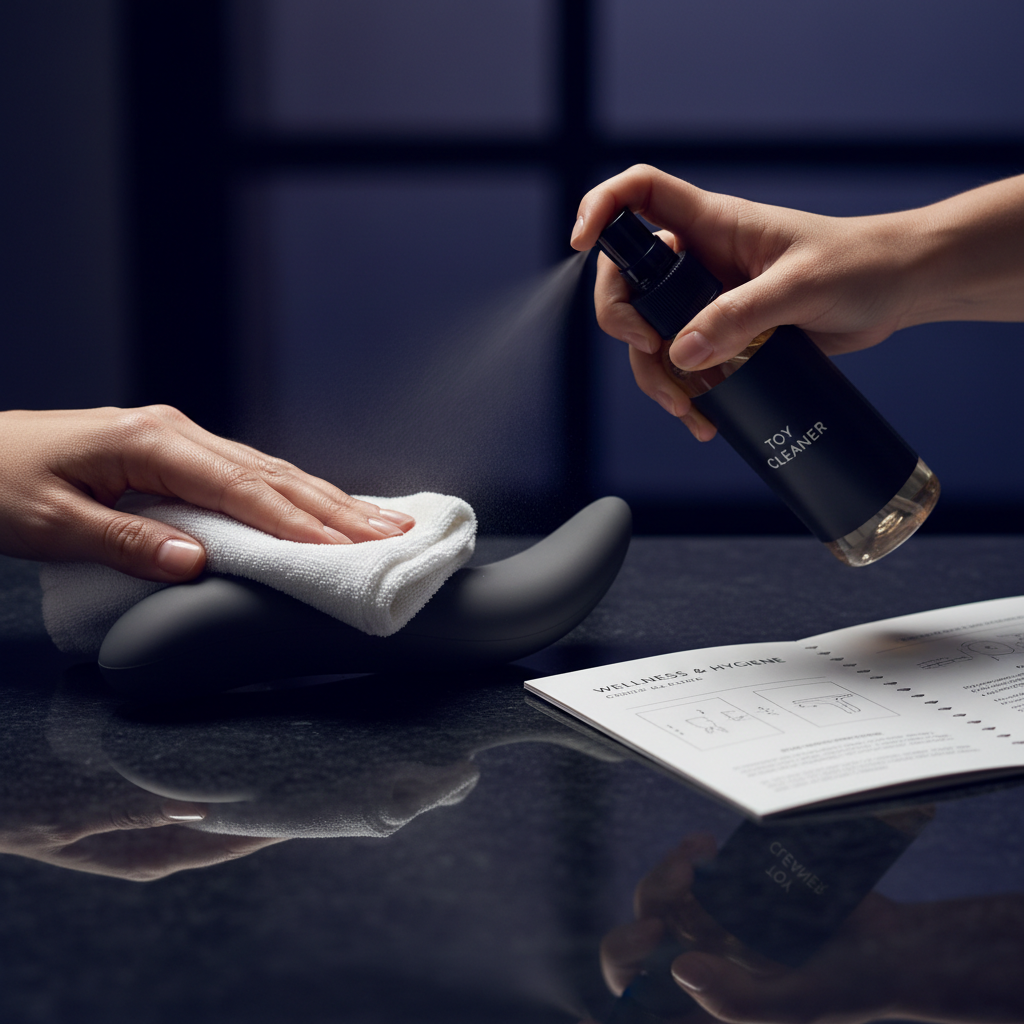
For motorised silicone toys, boiling isn't an option — the motor and electronics can't tolerate it. Instead, wash with warm water and a dedicated toy cleaner or a small amount of unscented antibacterial soap. Rinse thoroughly, since soap residue can irritate sensitive tissue. Pat dry with a clean cloth and allow to air dry completely before storing. Most quality silicone toys are waterproof, so submerging them briefly for cleaning is fine.
Toy cleaners are worth using. They're formulated to be effective against the pathogens most relevant to intimate use, gentle on toy materials, and safe for residual skin contact. Brands like Sliquid and Überlube make excellent toy cleaners that are widely available in Canada. Avoid harsh household cleaners, alcohol-based products on silicone (which can degrade the surface over time), and anything with strong fragrances.
Storage matters too. Store toys in individual cloth bags or the original packaging to prevent them from touching each other — some materials can react when in prolonged contact. Keep them away from direct sunlight and extreme temperatures. A dedicated storage box or drawer is ideal.
Finally, inspect your toys regularly. Look for cracks, chips, or changes in texture — especially on silicone toys, where surface degradation can create porous areas that harbour bacteria. If a toy shows signs of wear, it's time to replace it. A well-maintained quality toy should last years; a degraded one isn't worth the health risk.