
Water-Based, Silicone, or Oil? The Complete Canadian Lubricant Guide
Choosing the wrong lubricant can damage your toys, irritate your body, or break your condoms. Here's how to get it right every time.
Affiliate Disclosure: This post may contain links to products on Amazon.ca. As an Amazon Associate we earn from qualifying purchases at no extra cost to you. Product recommendations are based on our editorial assessment; affiliate relationships do not influence our reviews or recommendations.
Lubricant is one of the most important — and most misunderstood — products in the adult wellness category. The right lubricant makes everything more comfortable, more pleasurable, and safer. The wrong one can degrade your toys, cause irritation, or compromise your contraception. Understanding the three main types is essential.
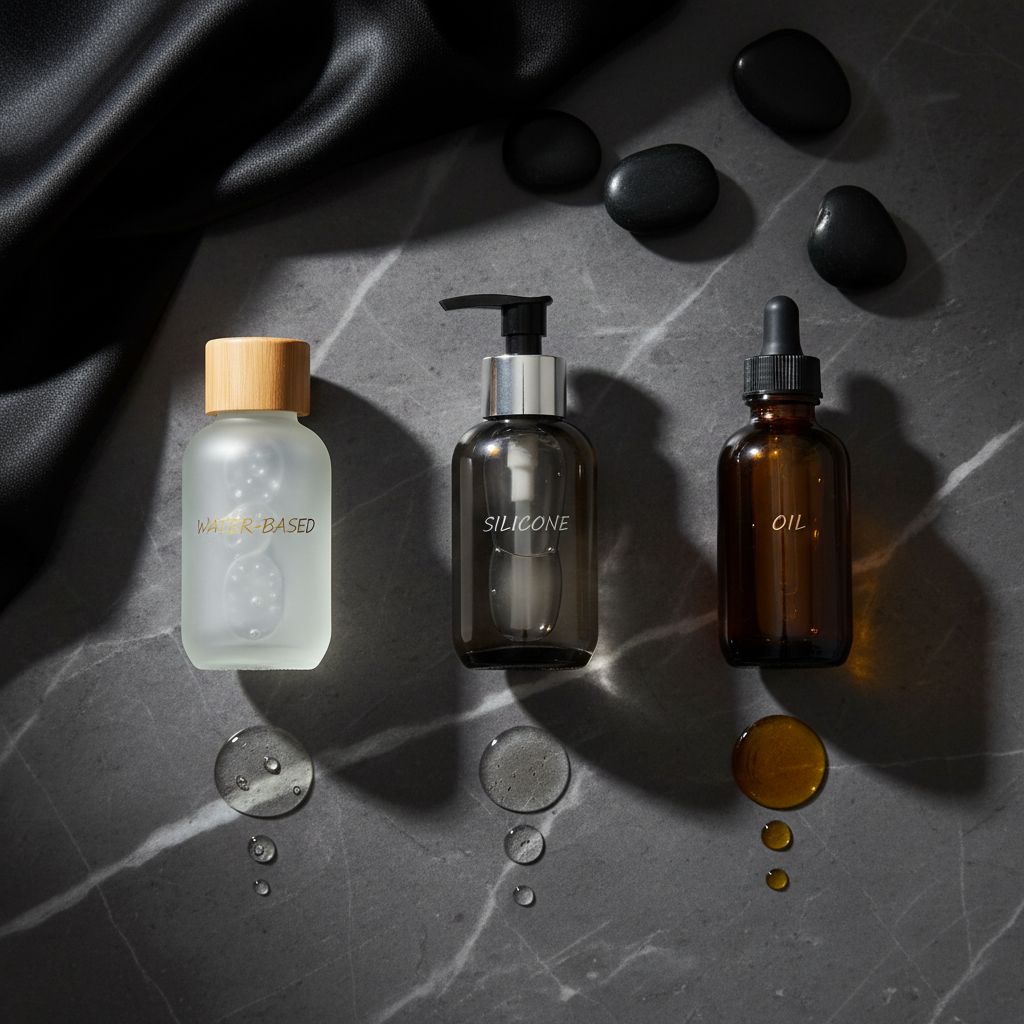
Water-based lubricants are the most versatile option. They're safe with all toy materials — including silicone — and compatible with all condom types. They're easy to clean up, non-staining, and generally the gentlest option for sensitive skin. The main drawback is longevity: water-based lubes dry out faster than other types and may need reapplication during longer sessions. They also tend to be less effective in water, since they wash away easily.
Silicone-based lubricants last significantly longer than water-based options and are excellent for use in water. They feel silky and luxurious, and a small amount goes a long way. The critical caveat: silicone lubricant should never be used with silicone toys, as the silicone in the lubricant can bond with and degrade the toy's surface over time. Use silicone lube with glass, stainless steel, ABS plastic, or hard plastic toys only — or use a condom over a silicone toy as a barrier.
Oil-based lubricants — including coconut oil, which has become popular as a 'natural' option — are long-lasting and feel luxurious. However, they degrade latex and polyisoprene condoms, making them unsuitable for use with most condoms. They can also disrupt the vaginal microbiome and increase the risk of bacterial vaginosis in some people. Oil-based lubes are best reserved for external use or for situations where condoms are not being used.
For anal play specifically, a thicker water-based lubricant or a silicone-based lubricant is recommended. The anal canal does not self-lubricate, so more lubricant is needed than for vaginal use, and a thicker consistency provides better cushioning. Products like Sliquid Sassy and pjur Back Door are formulated specifically for this purpose.
Ingredients to avoid: glycerin (can promote yeast infections in some people), parabens (preservatives with potential hormonal effects), nonoxynol-9 (a spermicide that irritates mucous membranes), and benzocaine or lidocaine (numbing agents that mask pain signals that exist for a reason). The cleanest formulations — like those from Sliquid and System JO — use minimal, well-tolerated ingredients.